

Best Places to Elope in the Twin Cities — The Complete Minneapolis + St. Paul Guide
Here’s something I genuinely love about the Twin Cities: it doesn’t look like a typical elopement destination, and then you actually explore it — and it’s extraordinary.
A Victorian glass conservatory filled with seasonal blooms. A 53-foot waterfall inside city limits. A historic stone bridge over the Mississippi River. Old-growth wildflower gardens. Bluffs above the St. Croix River less than an hour from downtown. An industrial-chic arts district. Lakeside trails and sculpture gardens and intimate venues tucked into neighborhoods that feel like they belong to you.
The Twin Cities have more beautiful, interesting, photographically varied elopement locations per square mile than almost anywhere I’ve photographed. And the best part: all of it is accessible. No permit lottery, no four-hour drive, no 4am wake-up. You can elope in a stunning location in Minneapolis or St. Paul and be having dinner at one of the best restaurants in the Midwest by 7pm.
Here is your complete guide — every location, with real links and honest details.
St. Paul
Como Park Conservatory — The Crown Jewel
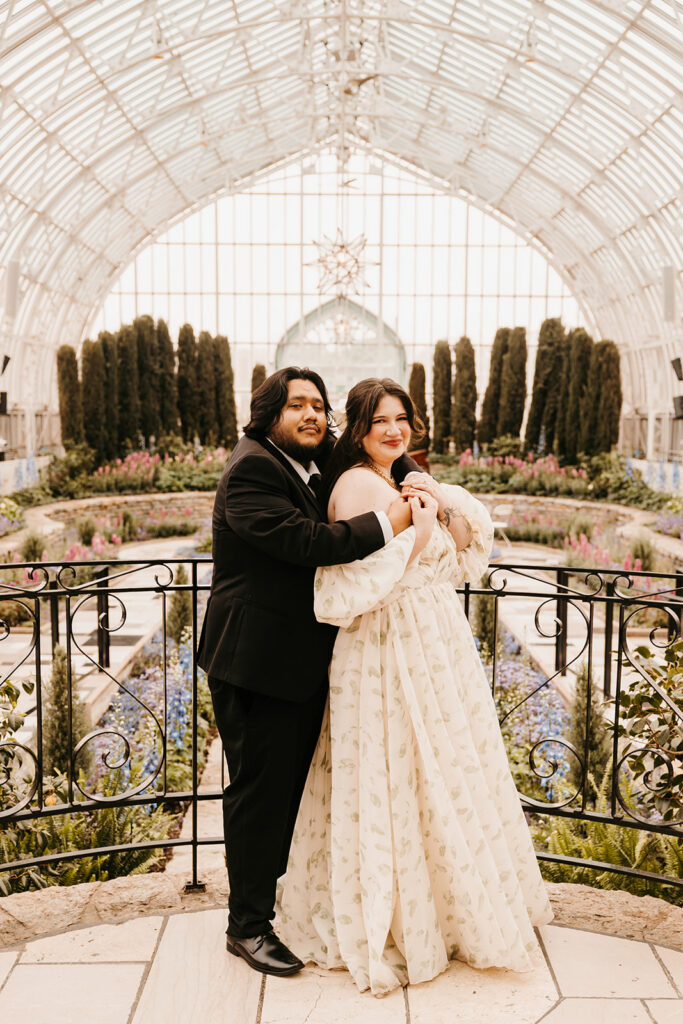
The Marjorie McNeely Conservatory at Como Park is my single favorite indoor elopement location in Minnesota. A Victorian glass greenhouse built in 1913, listed on the National Register of Historic Places, and still extraordinary over a century later.
The Sunken Garden is the most sought-after ceremony space — a long glass greenhouse with arched walls, a central fountain, and seasonal blooms that change throughout the year. It accommodates intimate ceremonies of up to around 100 guests and creates a floral, luminous backdrop that photographs beautifully in every season and in any weather.
The Japanese Garden (open May–October) is quietly stunning — koi ponds, stone lanterns, a traditional tea house, and meticulous ornamental gardens that photograph beautifully for portraits and intimate ceremonies for very small groups.
The North Garden has a lush, intimate quality with useful tropical plants — cinnamon, banana, and herbs — that creates a more private atmosphere than the Sunken Garden.
Como Park is city-owned with free public admission. Ceremonies in reserved spaces require booking through the Como Park events team. For elopements and portraits in the public outdoor areas — the Japanese Garden, the grounds, the outdoor gardens — no rental is needed during park hours.
Best for: Year-round botanical elegance, portraits with real variety, and the most beautiful glass greenhouse in Minnesota.

Landmark Center — Historic Grandeur
Landmark Center is one of St. Paul’s most stunning architectural spaces — a Romanesque Revival building from 1902 with vaulted ceilings, a skylit atrium, and the kind of architectural grandeur that makes intimate ceremonies feel genuinely epic. The interior is extraordinary.
Best for: Couples who want dramatic indoor architecture. The atrium photographs beautifully in natural light.
Minnesota State Capitol Grounds
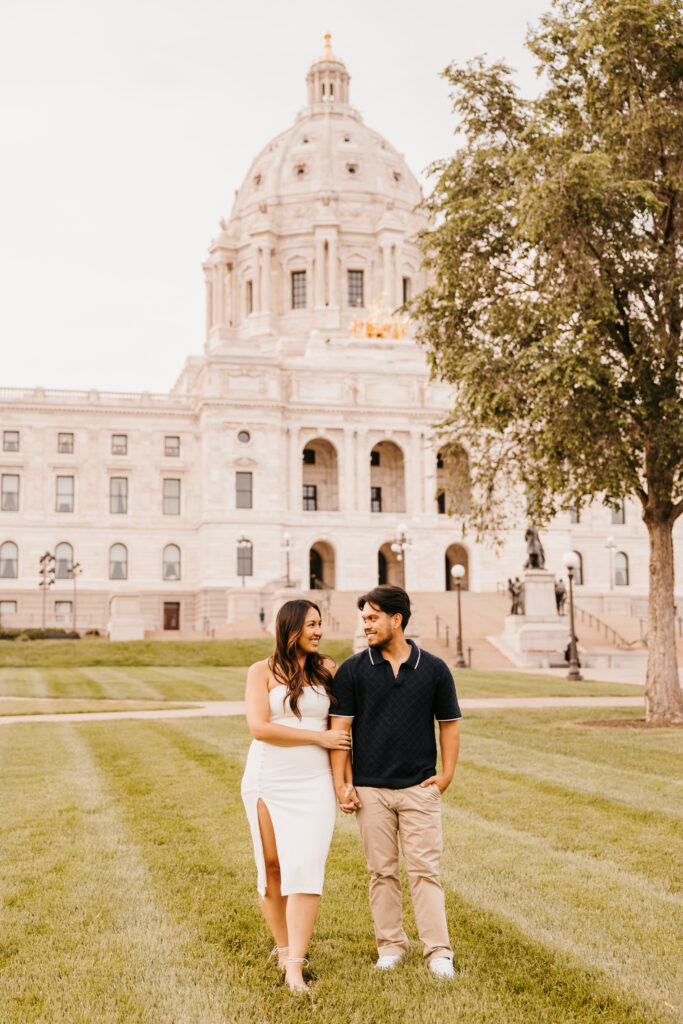
The Minnesota State Capitol is one of the most beautiful Beaux-Arts buildings in the country — and the surrounding grounds and approach offer striking architectural portraits. The exterior steps and grounds are public space.
Best for: Architectural grandeur and a civic landmark backdrop. Combine with nearby Rice Park for variety. mn.gov/admin/buildings/capitol


Raspberry Island + Harriet Island Regional Park, St. Paul
Harriet Island Regional Park sits along the Mississippi River with beautiful views of the downtown St. Paul skyline from the water. Raspberry Island, accessible by foot bridge from Harriet Island, offers one of the most underrated portrait locations in the city — surrounded by water with the St. Paul skyline visible in every direction. Intimate, beautiful, and consistently overlooked.
Best for: Couples who want riverfront portraits with the St. Paul skyline as backdrop without the crowds of the Minneapolis side.
Hidden Falls Regional Park, St. Paul
Hidden Falls Regional Park is tucked into the Mississippi River valley below Mississippi River Boulevard in St. Paul — a spring-fed waterfall in a wooded ravine, with a quiet sandy beach on the river. It’s the secret that Minnehaha Falls visitors never find, which makes it significantly more private. The rentable outdoor shelters are a nice addition for gatherings.
Best for: Couples who want a quieter waterfall and riverfront experience without Minnehaha’s crowds.
Summit Avenue + Cathedral Hill, St. Paul
Summit Avenue is one of the longest stretches of intact Victorian architecture in the United States — a tree-lined boulevard of historic mansions running from the Cathedral of Saint Paul to the river. The Cathedral itself sits on a hill overlooking downtown with sweeping views. The surrounding Cathedral Hill neighborhood has beautiful tree canopy, architecture, and character.
Best for: Couples who love Victorian architecture, tree-lined streets, and an upscale St. Paul neighborhood feel.
Twin Cities Courthouses for Elopements
St. Paul City Hall + Ramsey County Courthouse
For couples who want to make it official in a beautiful historic building, the Ramsey County Courthouse in St. Paul is genuinely stunning — an Art Deco building with beautiful interior spaces, and judges available for civil ceremonies. After the ceremony, the surrounding downtown St. Paul area has beautiful architectural portrait options. Your photographer’s permit from the county handles the rest.


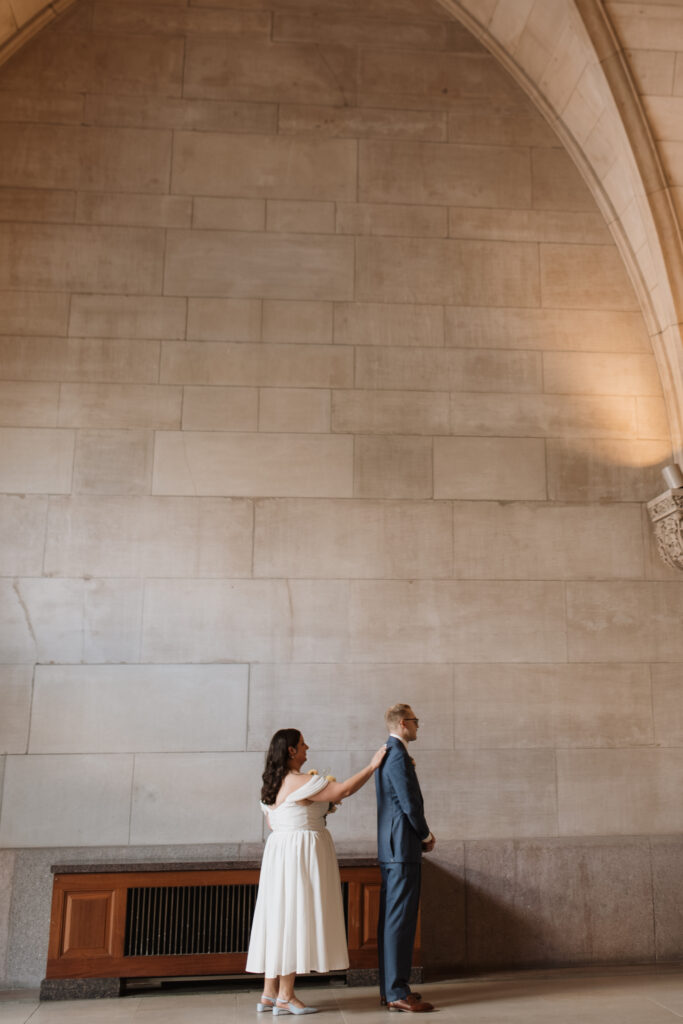
Minneapolis City Hall
In the heart of downtown Minneapolis, this is one of the most beautiful courthouses to elope at in my opinion! Stunning staircase, beautiful architecture, and minutes away from popular coffee shops, restaurants, and Minneapolis parks.


Minneapolis Parks
Minnehaha Falls + Regional Park
Minnehaha Falls is the most iconic waterfall in the Twin Cities — 53 feet, surrounded by Minnehaha Regional Park’s limestone bluffs, wooded gorge trail, and garden spaces.
The gorge below the falls is one of my favorite portrait locations in all of Minneapolis — a sheltered, lush, enclosed space that feels completely removed from the city above it. In winter, when the falls partially freeze, it becomes one of the most extraordinary natural phenomena in the Twin Cities.
Couples can reserve the Longfellow Gardens or Pergola Garden ceremony spots for a 3-hour window — both offer beautiful settings with optional skyline views. minneapolisparks.org
Best for: Iconic waterfall photos accessible year-round. Spring and fall are especially stunning; the frozen winter falls are extraordinary.
Eloise Butler Wildflower Garden + Bird Sanctuary
Tucked inside Theodore Wirth Park, Eloise Butler Wildflower Garden is one of the oldest public wildflower gardens in the United States — established in 1907. The 15 acres include woodland paths, a bog boardwalk, and native Minnesota wildflowers in sweeping meadows.
Open seasonally (roughly late April through October). Genuinely magical during late spring and summer bloom — and completely peaceful.
Best for: Couples who love native plants, natural beauty, and a quiet atmosphere. One of the most underused elopement gems in Minneapolis.
Lake Harriet + Rose Garden
Lake Harriet combines the formal Rose Garden (blooming through June–July and absolutely stunning), the beautiful bandshell, and the wooded lakeshore trail into one of the most varied portrait locations in Minneapolis. The Rose Garden alone is worth planning a session around during peak bloom.
Best for: Floral garden beauty combined with lakeside scenery. June Rose Garden sessions are extraordinary.
Bde Maka Ska (Chain of Lakes)
Minneapolis’s largest city lake at 421 acres — open water views, the city skyline on the eastern shore, and the beautiful chain of lakes pathway connecting it to Lake of the Isles and Cedar Lake. Summer evenings here, with the light on the water and the city behind you, are genuinely beautiful.
Best for: Classic Minneapolis lake elopement with city energy nearby.
Lake of the Isles
The most picturesque of the Minneapolis chain — smaller, quieter, surrounded by beautiful homes and wooded islands. The walking path around the lake offers constantly changing views and an intimate, enclosed feeling. minneapolisparks.org
Best for: Couples who want quiet beauty and privacy within the city.
Theodore Wirth Park
Minneapolis’s largest park — wetlands, prairie, forest trails, and the beautiful Wirth Lake. The Wirth Chalet and surrounding landscape work beautifully for intimate ceremonies and vary tremendously by season.
Minneapolis Sculpture Garden
The Walker Art Center’s Sculpture Garden — home to the iconic Spoonbridge and Cherry — is one of Minneapolis’s most recognizable landmarks. Playful, modern, artistic portraits that look unlike any other elopement location in the state.
Best for: Couples with a playful, modern aesthetic. The Spoonbridge and Cherry is genuinely iconic.
Minneapolis Historic + Urban
Stone Arch Bridge + St. Anthony Falls Historic District
The Stone Arch Bridge is a former railroad bridge converted into a pedestrian crossing over the Mississippi — 2,100 feet of historic stone arches with views of St. Anthony Falls, the riverfront, and the downtown skyline. The surrounding district has cobblestone streets, old mill buildings, and Waterpower Park with its overlook of the falls.
Best for: Urban history, river views, and architectural beauty. The golden hour light on the stone and water is exceptional.

North Loop Neighborhood
Minneapolis’s North Loop is one of the most photogenic urban neighborhoods in the state — converted warehouses, exposed brick, boutique hotels, and the specific character of a historic industrial district turned creative hub. The Hewing Hotel in particular has a beautifully designed rooftop and interior that photographs extraordinarily well for getting-ready moments and intimate ceremonies.
Best for: Couples who want urban industrial character — brick, warm light, and the energy of the city’s most stylish neighborhood.
Fort Snelling State Park
Fort Snelling State Park covers 3,000 acres at the confluence of the Mississippi and Minnesota Rivers — forest, prairie, river views, and the historic fort itself. It’s remarkably wild for a park this close to a major airport and urban core. Pike Island, accessible via a footbridge, offers complete riverside privacy.
Best for: Couples who want genuine wilderness privacy within the metro. Beautiful in fall for the river valley color.
Boom Island Park + Riverfront
Boom Island Park on the Mississippi River in northeast Minneapolis has open green space, river views, and a beautiful sense of openness — plus one of the most underrated views of the Minneapolis skyline from the water.




Just Outside the Twin Cities — Within an Hour
Afton State Park — St. Croix River Bluffs
Afton State Park on the St. Croix River is one of the most beautiful and underused elopement locations within easy reach of the Twin Cities — just 45 minutes east of Minneapolis. Rolling bluffs with 300-foot drops to the river, wooded ravines, prairie wildflowers, and a secluded beach about a half-mile hike from the parking area.
The combination of river views, bluff overlooks, wooded trails, and the quiet beach creates real variety for a full elopement portrait session. Couples who elope here often describe it as feeling completely removed from the city despite the short drive.
Best for: Couples who want river bluffs, wildflower prairies, and a secluded beach without a long drive. Beautiful from May through October.
Taylors Falls — Interstate State Park
Interstate State Park at Taylors Falls sits on the border of Minnesota and Wisconsin along the St. Croix River — ancient volcanic rock formations, dramatic glacial potholes, bluff overlooks, and riverfront trails. Just 45 minutes east of Minneapolis. One of the most dramatically geological locations within easy reach of the Cities.
After the ceremony, the charming town of Taylors Falls is right there — river boat tours, local restaurants, and that specific small-river-town magic that feels genuinely removed from city life.
Best for: Couples who want dramatic geology and river scenery without a long drive. Extraordinary in fall. A permit is required for ceremonies on the MN side — contact the park in advance.

St. Croix Bluffs Regional Park
St. Croix Bluffs Regional Park in Washington County sits along the St. Croix National Scenic Riverway — 579 acres of rolling prairies, wooded ravines, and bluffs overlooking the river. It’s quieter than Interstate Park, with a range of landscape types that work beautifully for portrait sessions.
Best for: Couples who want bluff and river scenery in a less-visited setting.
William O’Brien State Park, Marine on St. Croix
William O’Brien State Park sits along the St. Croix River near the charming town of Marine on St. Croix — one of Minnesota’s prettiest small towns. The park has beautiful Lake Alice, river access, and wooded trails that photograph beautifully, combined with the incredible character of Marine on St. Croix’s historic downtown for an after-ceremony wander.
Best for: Couples who want the combination of a beautiful state park and a genuinely charming small town for their elopement day.
Stillwater — Historic St. Croix River Town
Stillwater is one of Minnesota’s most beloved small towns — a historic river town perched above the St. Croix with Victorian architecture, beautiful bluff views, and the iconic lift bridge. It’s a complete elopement day in itself: ceremony on the bluffs or in one of the town’s parks, portraits along the historic main street, dinner at one of the excellent riverfront restaurants.
Best for: Couples who want a beautiful historic town experience combined with river bluff scenery. Beautiful in any season.
Indoor + Venue Options
Copper Hen Cakery & Kitchen, South Minneapolis
A beloved South Minneapolis neighborhood restaurant and bakery — warm, intimate, genuinely beautiful for gatherings of 20–50 guests. Exceptional scratch-made food and in-house wedding cakes. A venue with real character. copperhencakery.com

Quincy Hall, Northeast Minneapolis Arts District
Quincy Hall in Northeast Minneapolis is an industrial-chic venue in the historic Keller Building — high vaulted ceilings, white walls, ample natural light, and an outdoor patio. It’s a blank canvas that photographs beautifully and scales from intimate to larger gatherings. Surrounded by the galleries, breweries, and restaurants of the NE Arts District.
Best for: Couples who want modern-industrial elegance with the creative energy of Northeast Minneapolis nearby.
Mother Co. Plants, Minneapolis
Mother Co. Plants in Minneapolis is one of the most unique and genuinely charming elopement venue options in the Cities — a beautiful plant shop and event space where you can say your vows surrounded by lush tropical plants and natural greenery. They also offer private workshops like terrarium building for a creative post-ceremony activity.
Best for: Plant-loving couples who want an intimate, lush, botanical ceremony space with a genuinely unique character.
Tips for Eloping in the Twin Cities
Permits: Some Minneapolis and St. Paul parks require permits for ceremonies. Minnehaha Park’s Longfellow Gardens and Pergola Garden both have reservable ceremony spots. Como Park reserved spaces require booking. As your photographer I help navigate this — nothing will catch you off guard.
Weekdays: A Thursday elopement at Minnehaha Falls or Eloise Butler will feel significantly more private than a Saturday. If you have any flexibility at all, weekdays are worth it.
Timing: The Twin Cities has four full seasons — see my Best Season to Elope in Minnesota → guide for detail. Late May through September for lush greenery; October for extraordinary fall color; winter for frozen waterfall drama.
Fill out my contact form → and let’s choose your perfect Twin Cities elopement location.
Frequently Asked Questions
Can you elope at Minnehaha Falls without a permit?
Yes you need a permit to get married at Minnehaha Falls. If you want a reserved ceremony spot — like the Longfellow Gardens or Pergola Garden — those require a reservation through Minneapolis Parks. I help couples navigate this so everything is sorted well before the day.
What’s the most private elopement location in the Twin Cities?
For true privacy, I’d point couples toward early morning weekday sessions at Eloise Butler Wildflower Garden, Hidden Falls Regional Park in St. Paul, or Lake of the Isles. Outside the metro by 45 minutes, Afton State Park’s secluded river beach is genuinely private on a weekday morning.
Is Como Conservatory good for elopements in winter?
It’s actually one of my favorite winter elopement options in Minnesota. The Conservatory stays lush and blooming year-round regardless of what’s happening outside — so a January elopement inside a warm Victorian greenhouse while snow falls through the glass is genuinely stunning.
Do you need permits for wedding photography in Minneapolis parks?
Commercial photography in Minneapolis parks typically requires a permit for the photographer. I hold the necessary permits for the parks I regularly work in, so couples don’t need to worry about this — it’s handled on my end.
What’s the best Twin Cities elopement location for fall color?
Minnehaha Park’s gorge trail in October is extraordinary — the maples drop red and yellow leaves along the entire path. Theodore Wirth Park and the Chain of Lakes are also beautiful. For the best fall color near the Cities, Afton State Park and the St. Croix River bluffs peak in early October and are worth the 45-minute drive.
More Minnesota posts:
+ Best Seasons To Elope in Minnesota
+ Minnesota Cabin and Airbnb Elopement Guide